Moving house with a side of curry.

Back in high school I played hockey (had all intentions to join a team in Melbourne but that still hasn’t happened), and playing hockey in country Victoria meant the opportunity to come to Melbourne every mid-year school holidays to play on synthetic fields. My family and I always stayed in Brunswick, half way between the State Hockey and Netball Centre and the Footscray fields, and I loved it.

Those weekend get-aways triggered my love for Melbourne. I always visioned I’d be living in a double-story terrace house on that side of the city. Ideally in Carlton, with my vintage style bike. Not too much to ask I would have thought.

Four and a half years later than planned, my dream started to come true. Last weekend my housemate and I moved house. It took six car loads, many hours of driving, two trailer loads and one broken window, but we finally handed back the keys to our old Chadstone house with the green walls and brown tiles. It was a massive job, and I cannot thank my dad enough for insisting on driving three hours from country Victoria to help us. (Also special thanks to Nicole for helping me locate an outfit, shoes, handbag and makeup amongst the boxes so I could make the Burlesque themed hen’s night (great idea btw). It was no easy feat.)

Although I am super dooper excited to be living in a new area, I’m a little sad.  That house was my home for eighteen months; that’s the longest I have lived in one place in Melbourne. I also had a fabulously big bedroom.

IMG_1477

I’m going to miss the green walls, the brown tiles and the random metal detailing. Sounds rightfully terrible, but it had character and that’s what made it feel like a home.

Anyway moving on (no pun intended), we moved into a two-bedroom unit in Brunswick. It’s no terrace house and it’s not in Carlton, but it does have white walls AND white tiles (Hello in the moment cooking photos) so things are getting better.

After having some well earned beverages Saturday night, we spent part of Sunday exploring our new ‘hood. We believed the only way to tackle a house full of boxes was to start with a good breakfast. Melbourne had put on a glorious day so we walked (!!) down to Sydney road with hopes of finding a table at Green Refectory. Unsuccessful, a quick check on Urbanspoon (one of my favourite apps) had us en route to Tom Phat. Gorgeous looking waiters AND a table outside, it was a great decision. The food was delicious too.

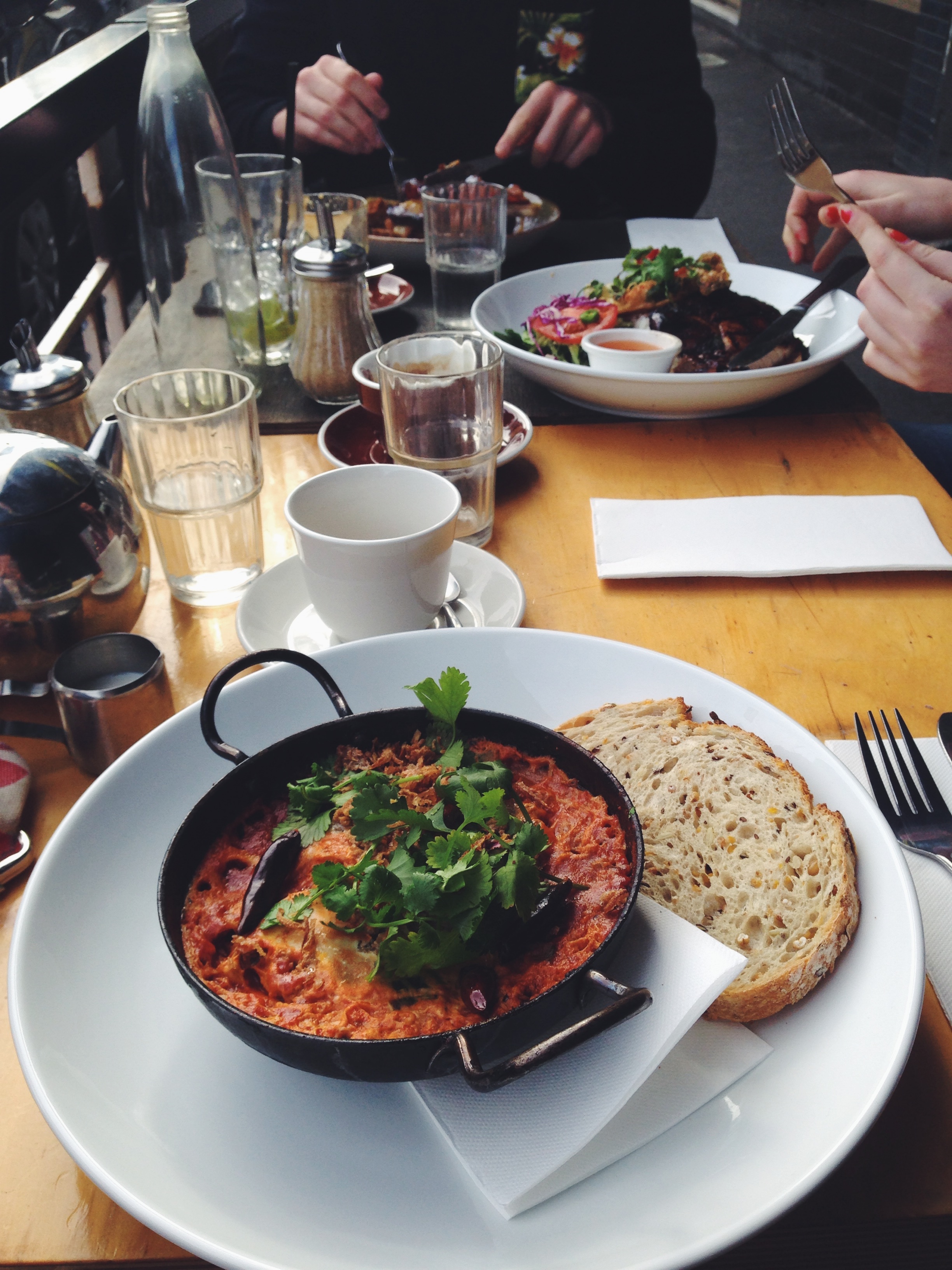
A menu of south-east asian inspired flavours, I ordered the Yunnan Baked Free-range Eggs with tomato, coriander & sweet tamarind pork and a slice of noisette multigrain.
Processed with VSCOcam with f2 preset

Mary had a grilled pork chop, crispy fried free-range egg, tomato, cucumber & rice (she was over the moon about that bit), and Cameron ordered the seemingly odd combination of French Toast with grilled banana & maple-syrup bacon. With a few coffees, a pot of tea and a lychee & lime soda, we thoroughly enjoyed our first brunch in brunswick. (Brunch in Brunswick, new hashtag? I think so.)

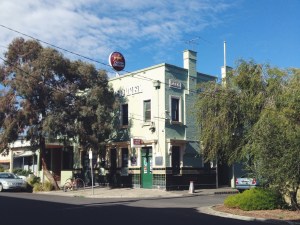
I was actually just really enjoying life. Our new place comes with more luxuries than just a white interior. It is within walking distance to shoe outlets, clothes stores, grocers, trams, Princes Park, and a bazillion cafe and restaurants. My to do list got a whole lot longer that morning. We also have a famous (if channel 9 counts?) pub on our street.
Processed with VSCOcam with f2 preset

Look familiar?

 The afternoon was spent unpacking boxes, and trying to get some order in the house. Mary went off to buy her vintage-style bike, and I unpacked the kitchen. Now that made me happy. Seeing all my beautiful crockery wrapped in newspaper had made me a little sad.

Processed with VSCOcam with f2 preset.

I also liked that my massive box of shoes had moved from the centre of the kitchen and it was now functional. After three days of snacking, quick (or no) lunches and restaurant dinners, it was nice to be able to prepare a real meal. So I made a curry. I am currently loving using indian spices in my cooking, and I find this dish very warm and comforting. Perfect for a cold winter’s night.

Processed with VSCOcam with f2 preset

Life’s good. Happy Wednesday.

Emma xo

Tofu & vegetable curry

Serves 2-3

This recipe is a great way to boost your calcium intake. By replacing your meat with tofu (be sure to check the label for calcium content) and coconut milk for evaporated milk, you can boost your calcium intake by 400-500mg. 

Ingredients

1 tsp olive oil

1 garlic clove, crushed

1 cup vegetable stock

1 tsp cumin seeds

1 tsp ginger, finely grated

1/2 tsp tumeric, ground

300g firm tofu

200-300g pumpkin, diced

2 large carrots, diced

8-10 baby corn spears, halved

200-300g cauliflower, fresh or frozen*

2/3 cup light evaporated milk (plain or coconut flavoured)

Method

1. Heat oil in saucepan. Add garlic, cumin, ginger and turmeric, and cook for 1-2 minutes. Add pumpkin and carrot, and stir to coat.

2. Add stock and cauliflower, and bring to the boil. Simmer until pumpkin is tender. Add evaporated milk and corn, stir. Mine needed thickening so I added cornflour (mix with cold water first).

3. Add tofu and stir to coat. Simmer until tofu is heated through.

4. Serve with a dollop of yoghurt and cooked rice.

Enjoy!

*There is little difference between fresh and frozen vegetables nutritionally. They are picked in season, blanched and snapped frozen which preserves the nutrients.

Purple love & positivity.

It’s hard to believe that I finished university six weeks ago. Time flies when you’re having fun.

So much has happened.

My cousin had a beautiful little girl. She is tiny and has the longest fingers. I would include a photo but she’s so cute I doubt you would keep reading.

I have made new friends, and I’ve caught up with old ones. One of my best friends moved to teach at a primary school in remote NT, which is just fabulous.It also feels like all my friends have, or are leaving the country. I have also caught up with some Contiki friends (twice). I have ticked several restaurants off my to do list, and I went to a Chobani workshop. I also made a rainbow checkerboard cake, went ice skating and bought a Macbook.

I’ve found out that I need to do an additional unit of study and I’ve submitted numerous job applications. And I’ve also had two job interviews.

I got my first interview out of my first ever job application. Yeah, that was exciting. I was also scared shitless. After the interview I left feeling okay. But the more I thought about it, the more horrendous it got.

I didn’t get the job.

As a result I didn’t have to leave Melbourne and move to a town of 1500 people AND I never will have my first ever dietitian interview again. The latter was a huge relief. I now know what I’m in for. Actually staying in Melbourne was a huge relief too – I have 53 restaurants saved to my Urbanspoon wishlist that need to be visited.

About two weeks after that interview, I got the call for another job. This one I really wanted. We arranged to do it via Skype. I was so excited, an opportunity to have an interview and wear my pyjama pants at the same time? Hell yeah.

The interview went well. It felt much better than my first one and and I was feeling good vibes. That was until two days later when I found out I was unsuccessful via social media. Yeah, that happened. It was a little ironic really, because I had mentioned in my interview that social media was here to stay.

Anyway, four days later I received the call and my feedback was unexpectedly positive. My interview wasn’t bad at all.

I could be bummed about it, honestly, finding out via social media was the biggest kick in the guts. But the reality is that there are more dietitians than there are jobs available so it’s going to take time and we’re bound to be up against our classmates.

So I’m actually feeling incredibly positive.

Why?

∼ I am getting interviews.

∼ I have a macbook, and it’s amazing.

∼  I’m moving to inner city Melbourne this weekend. Maybe my dreams are coming true?

∼ I’m also starting a new volunteer role next week.

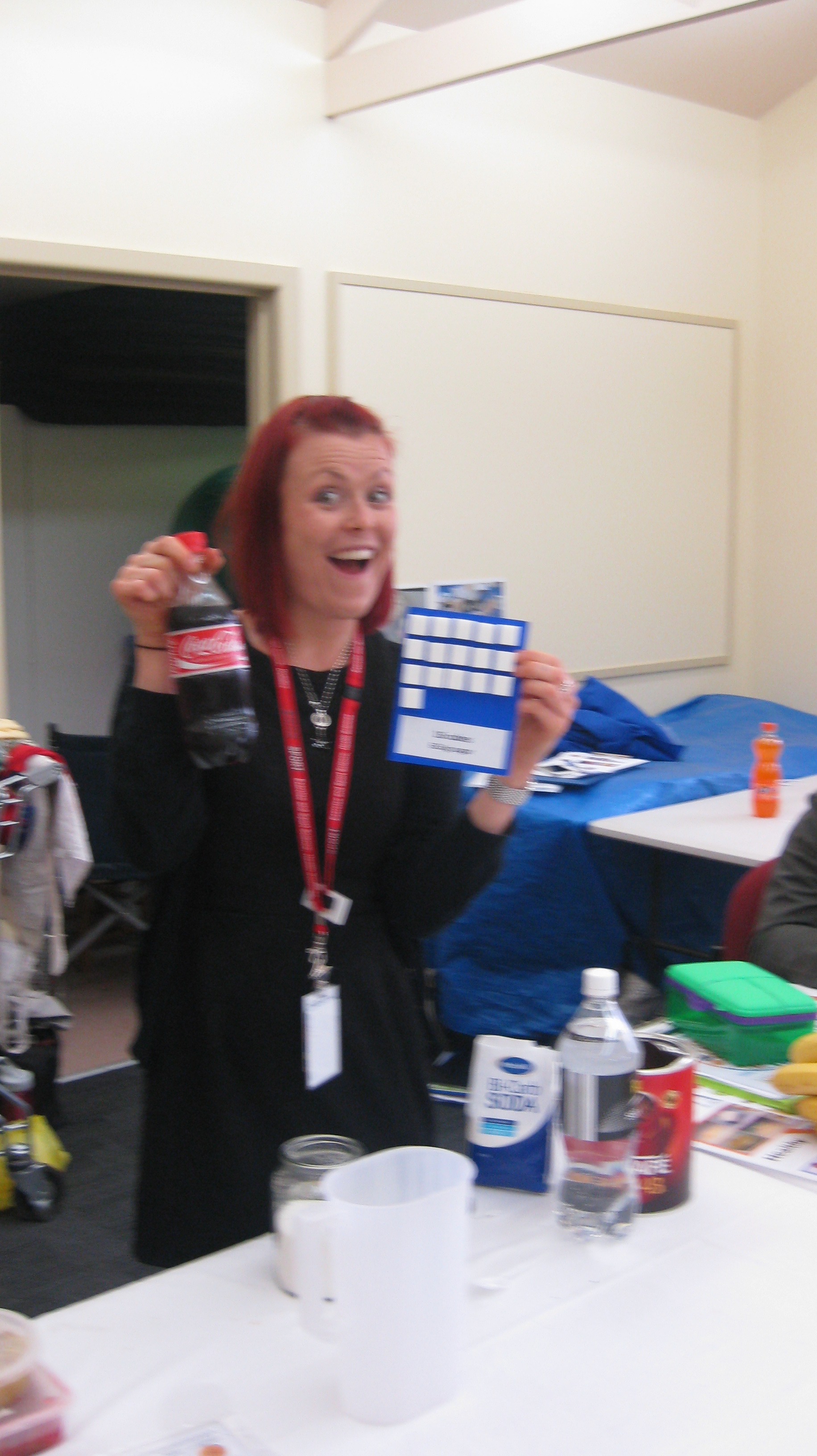
∼ Three new Chobani flavours have been released this week.

I have a lot to look forward to. We all do.

I believe it’s really important that, even when things in life suck, we learn from our failures and focus on the good and positive things in life. That’s what keeps me going.

With saying that, as my fingers danced over the keys of my new macbook (can’t you tell I’m in love?) writing this post, I briefly flicked over to twitter. I read an article discussing the link between diet and mental health. How relevant when I’m going on about how positive we should be. Studies have shown that a poor diet may be linked to depression and other mental health issues. Obviously there are an array of factors influencing mental health, and a healthy diet isn’t going to solve everything. But in most cases, your diet is in your control. So, a healthy diet is a pretty good start to leading a happy life.

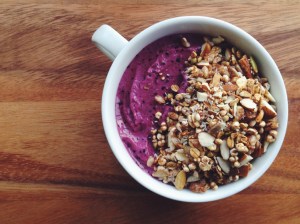
This makes me want to share my breakfast with you. It’s healthy, and just looking at it made me happy. It was also like eating ice cream. Cold Rock particularly.

Processed with VSCOcam with f2 preset

Processed with VSCOcam with f2 preset

Processed with VSCOcam with f2 preset

Kudos to Heidi Sze for the inspiration. Check out her blog, I love it.

Purple soft serve with a party on top.

Blend one frozen banana, a handful of frozen blueberries (I don’t measure) and a big dollop of greek yoghurt. Just blend it till it’s smooth.

I topped this with a mixture of my homemade granola, fruit free clusters, chopped almonds, desiccated coconut and a drizzle of sugar-free maple syrup.

But it’s your party, and you can top it with muesli, granola, coconut flakes, nuts, seeds and peanut butter if you want to.

It is a happy wednesday indeed.

Emma xo

Dietitian? But I don’t need to go on a diet.

I have many memories of the patients I managed during clinical placement at RMH last year. From watching a stroke patient progress from being artificially fed through his nose to sitting up at the table eating a meal within weeks, to the guy that would prefer to talk about his failing love life than focus on his diabetes management. It was a challenging but rewarding experience, and often full of one or two surprises. You know, exploding ileostomy bags and ‘fattening bananas’ (I had never heard of that one before). I also came to the realisation that people don’t know much about dietitians.

Emma: ‘Hello Mr Smith (my classic go-to fake name when rehearsing in the car), my name is Emma and I’m a student dietitian. How are you today?’

Mr Smith: ‘Dietitian? But I don’t need to go on a diet.’

No, no he didn’t. A weight loss diet that is. Although I can’t recall his condition, I do remember that I wasn’t seeing him for weight loss. And to be honest, this was the case for the majority of my patients.

As I progressed through my degree, I have become aware of two things. The general public don’t know a lot about what we do, and I’ve learnt that my options are more than just hospitals and weight loss counselling.

So, what do dietitian’s do?

Dietitians are the experts in food and nutrition. We help people understand the link between food and health, and provide education around maintaining or achieving good health and preventing disease, and dietary choices for treating diseases.

We have all spent at least four years at university studying the physiology of our body systems, biochemistry and food science. We not only understand the nutrients in foods, but we understand how these foods affect our bodies. We have learnt about chronic disease and how our environment plays a huge part on our health. We understand how to interpret nutrition science, know that everything is not black and white and have learnt to embrace the grey.

We work in an array of roles in various settings at the individual and population level, such as:

Hospitals

During my clinical placement I saw patients in the acute, aged care, rehabilitation and outpatient settings. These patients came from an array of clinical areas such as cardiology, diabetes, gastroenterology, infectious disease, trauma, oncology, bone marrow transplant, liver, kidney disease, surgical and stroke. I managed patients who weren’t eating enough and patients eating too much. I taught individuals how to eat now that they have colostomy bags, and I worked with a man following his amputation to ensure that he was eating sufficient protein for wound healing.

I needed to understand their medical condition to know the nutritional implications, their social life, know what medications they were taking, interpret their blood tests and of course, assess their diet.

Community health

Dietitians in community health can have a variety of roles from individual consultations to group education sessions or project planning. On my community placement I was lucky to be part of a team that worked with newly arrived refugee and asylum seekers. We ran a supermarket tour, taught them how to pack a healthy lunch box and provided them with healthy snack ideas. We educated on the sugar content of drinks, showed them how to make porridge, and worked with them in making their traditional meals healthier. It was amazing, and it was an absolute pleasure to be able to teach them concepts that for most of us come so naturally, yet are so crucial to their lives in Australia.

20140716-124401-45841435.jpg

IMG_5170

Dietitians also complete research projects that investigate issues such as  food insecurity in the region or review the service to ensure it meets the needs of its clients.

Private practice & consultancy

Dietitians can work for themselves or with other health professionals in a private practice offering individual counselling group education sessions. During my undergrad degree I completed work experience with a private practice dietitian. With a special interest in food intolerance and food sensitivities, Zoe assisted with the identification, management and symptom relief of irritable bowel syndrome (IBS), fructose malabsorption, Coeliac disease and general gastrointestinal discomfort, and she also counselled patients in weight loss.

Food service management

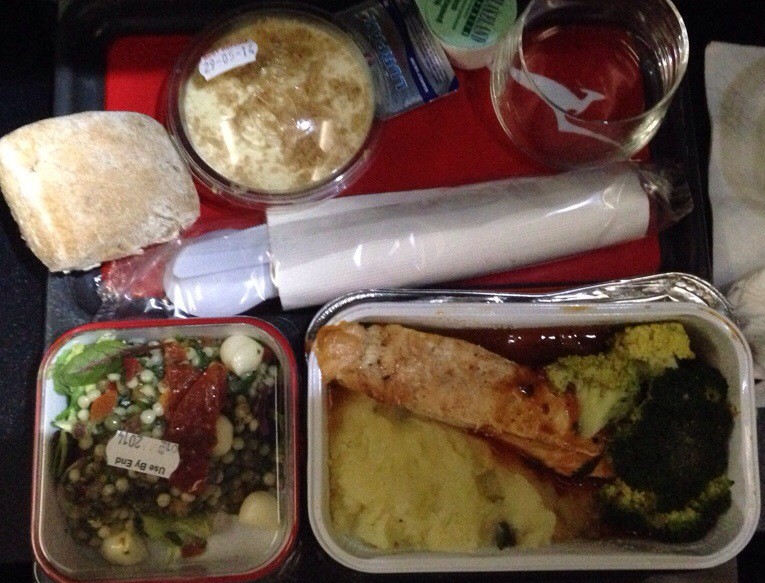
Food service dietitians are involved in food policy planning, and menu assessments and planning for large-scale food provision facilities such as hospitals, aged care homes, child care centres, boarding schools and prisons. Since my food service placement, I have a new appreciation of hospital and plane food. And when you think about it, you have to be practical when providing 800 people with meals 30,000 feet above sea level. To be honest, I was pretty impressed with the salmon and broccoli on my flight from London this year.

20140716-123853-45533314.jpg

The media

Television, magazines, blogging. Need I say more?

Public Health

Dietitians can work for the government developing food policy and regulation. You will often see dietitians on teams at Diabetes Australia, Nutrition Australia, The Australian Red Cross and other non-government organisations developing and implementing different programs.You may even hear of a dietitian helping treat malnourished children in third world countries. Pretty cool hey?

The Food Industry

You know those big food companies such as Kellogg’s and Pepscio? Dietitians are there helping reformulate products to provide healthier options to Australians, and ensure that all food regulation is complied with.

Sports Nutrition

Some dietitians complete addition training and become accredited with the Sports Dietitians Australia. Sports dietitians provide expert guidance on your body’s nutrition needs so that you can prepare, compete and recover optimally. Just between you and me, I would love to be the team dietitian for the Essendon Football Club.

and finally, research & teaching

Who best to research the links between nutrition and health than dietitians? And those seven people who have taught, supported and shared their wisdom with me throughout my masters and continue to do so? All Dietitians.

I know I’ve only scraped the surface but I hope this has helped you understand a little more about what we do. Maybe it has even inspired you a little?

So if you are interested in joining the wonderful world of dietetics, check out this list of accredited Australian dietetic courses.

Want to find a Accredited Practising Dietitian near you? Click here.

Happy Wednesday everyone.

Emma xo

For the love of greek yoghurt.

Okay, I’ll be honest. For the love of Chobani Greek yoghurt.

Processed with VSCOcam with f2 preset

A few weeks ago, I let you into my little adventure to a Chobani Workshop & Masterclass. (If you’re new to my ramblings, you can read about it here.)

One question I was asked was ‘how do you use Chobani?’, and today I’m going to share that with you.

But first, why do I love to use Chobani so much?

It’s thick and creamy. Then it must be full fat, right? Wrong.

There are no fat and low fat varieties available. With and without fruit.

It’s the straining process which removes the excess whey that makes it so thick, and results in its high protein content. ~10g protein/100g for the plain, and about ~8g/100g for the fruit containing varieties.

This also results in quite a strong flavour, and may have you running for the hills. But it quickly grows on you, I promise (I used to eat artificially sweetened flavoured yoghurts for goodness sake).

It’s also relatively low in sugar. I have heard concern expressed re: sugar content of the fruit varieties. Keep in mind that this comes predominately from the lactose (naturally present sugar in milk products) and the fruit.

The Australian manufactured varieties are also free from GMO’s.

And I love it because it’s so extremely versatile and can be a healthy substitute for sour cream, cream and even ice-cream.

Photo 6-07-2014 8 41 20 pm

So here are a few tips of how to use plain Chobani. Some are mine, plus a few I’ve picked up from friends along the way.

– It’s a great snack. If you don’t like the flavour, add some frozen berries or a sprinkle of cinnamon.

– With fruit, muesli and a sprinkle of nuts & seeds for a well balanced breakfast.

Processed with VSCOcam with f2 preset

– In smoothies, or mix a tbsp or two with a frozen banana to make some soft serve.

– Or just put it in the freezer. It makes a great fro-yo. Just mix it every ten minutes so it doesn’t go rock hard & icy.

20140708-103227-37947704.jpg

This plain was mixed with frozen blueberries & frozen.

– It can be a replacement for sour cream on your tacos, nachos, soups and baked potatoes.

– It can replace cream cheese or feta cheeses in your homemade dips. With a drizzle of sweet chilli sauce, it can make a great dipping sauce too.

Processed with VSCOcam with f2 preset

– I’m currently using it as a salad dressing. Mix a tsp with some dijon mustard, smoked paprika, olive oil and lime juice. It’s a winner.

I’ve also used it as a topping on pancakes, pizzas, in cupcake icing and in muffins. The possibilities are endless.

So tell me, how do you use your greek yoghurt?

Happy Friday.

Emma xo